



The Hidden Productivity Cost of Poor Environments: How Your Space Affects Focus, Performance, and Wellbeing
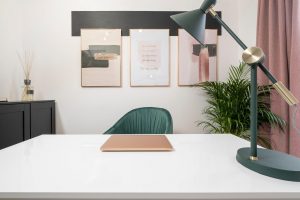
The Hidden Productivity Cost of Poor Environments
When productivity drops, most people immediately look inward. They blame a lack of discipline.
Poor time management. Low motivation. Too many distractions. Rarely do they stop to consider whether the environment around them might be contributing to the problem.
Yet the spaces we spend time in have a significant impact on how we think, work, focus, and perform.
This is especially true as more people work from home, run businesses from home offices, or spend increasing amounts of time within their living environments.
The reality is that productivity is not influenced by people alone. It is influenced by the spaces they operate within.
Why Environment Matters More Than Many People Realise
Every environment either supports the activities taking place within it or works against them.
A well-designed workspace makes it easier to focus. A poorly designed workspace creates obstacles that constantly compete for attention.
These obstacles are often subtle. Poor lighting strains the eyes and contributes to fatigue. Clutter increases visual noise and makes it harder to focus. Insufficient storage creates constant distractions.
Uncomfortable furniture affects concentration. Noise disrupts deep work. Poor layouts interrupt flow and efficiency.
Individually, these issues may seem insignificant. Collectively, they create friction that affects performance every single day.
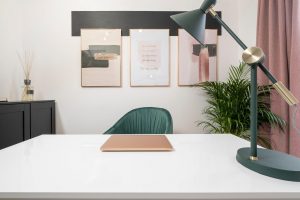
How Poor Environments Create Daily Friction
One of the most overlooked concepts in interior design is friction. Friction occurs whenever a space makes everyday tasks more difficult than they need to be.
Perhaps documents are stored too far from where they are used. Perhaps there is nowhere suitable to take video calls. Perhaps cables are constantly visible and tangled. Perhaps work surfaces become cluttered because storage has not been properly considered.
None of these problems is dramatic. Yet each one requires additional effort.
Repeated enough times, these small interruptions begin to affect concentration, efficiency, and productivity.
Good design removes unnecessary friction. It allows people to focus on the task rather than constantly adapting to the space around them.
Why Productivity Is About More Than Home Offices
When people hear the phrase “productive environment”, they often think exclusively about home offices.
The reality is much broader. The kitchen can affect morning routines. The bedroom can influence sleep quality. Living spaces can either encourage relaxation or contribute to overstimulation.
Storage solutions can affect the organisation throughout the home. The environment as a whole influences how people move through their day.
This is why interior design should never be viewed solely through the lens of aesthetics.
The most successful spaces support the activities they are intended. They make daily life easier rather than more complicated.
Understanding how different spaces support different behaviours is a key part of creating interiors that perform well over time.
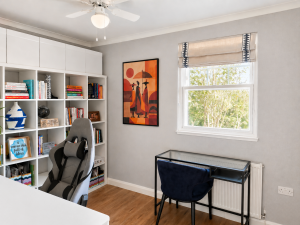
The Relationship Between Environment and Well-being
Productivity is not simply about getting more work done. It is also about maintaining energy, focus, and well-being. An environment that constantly demands attention can contribute to mental fatigue.
An environment that feels organised and functional can reduce stress and support clearer thinking.
This does not mean every space needs to be minimal or highly structured. It means the environment should support the people using it.
When design aligns with lifestyle and daily routines, spaces become easier to live in and easier to work within.
Why High-Performing Spaces Feel Effortless
One of the most interesting things about well-designed environments is that people often stop noticing them.
The layout works. The storage works. The lighting works. The space supports the activity taking place within it. As a result, attention can remain focused on what matters.
This is often the difference between a room that looks good and a room that performs well.
A successful interior does not constantly demand attention. It quietly supports the people using it. Many of these principles can be seen in spaces where layout, functionality, storage, and lifestyle requirements have been integrated from the outset.
Final Thoughts
When productivity declines, it is natural to examine habits, routines, and behaviours. But sometimes the problem is not the person.
Sometimes the environment itself is creating unnecessary obstacles. At NateBel Interiors, we believe great design is about more than aesthetics.
It is about creating spaces that support the way people live, work, rest, and perform. Because the most effective environments are not simply beautiful.
They make everyday life easier. If your home, workspace, or home office no longer supports the way you work and live, a well-designed environment can make a significant difference.
Related Articles:
- What Happens After a Home Redesign?
- Why Kitchens Fail Despite Looking Stunning?
- How Texture Shapes the Feeling of a Room?
Post a Comment
You must be logged in to post a comment.