



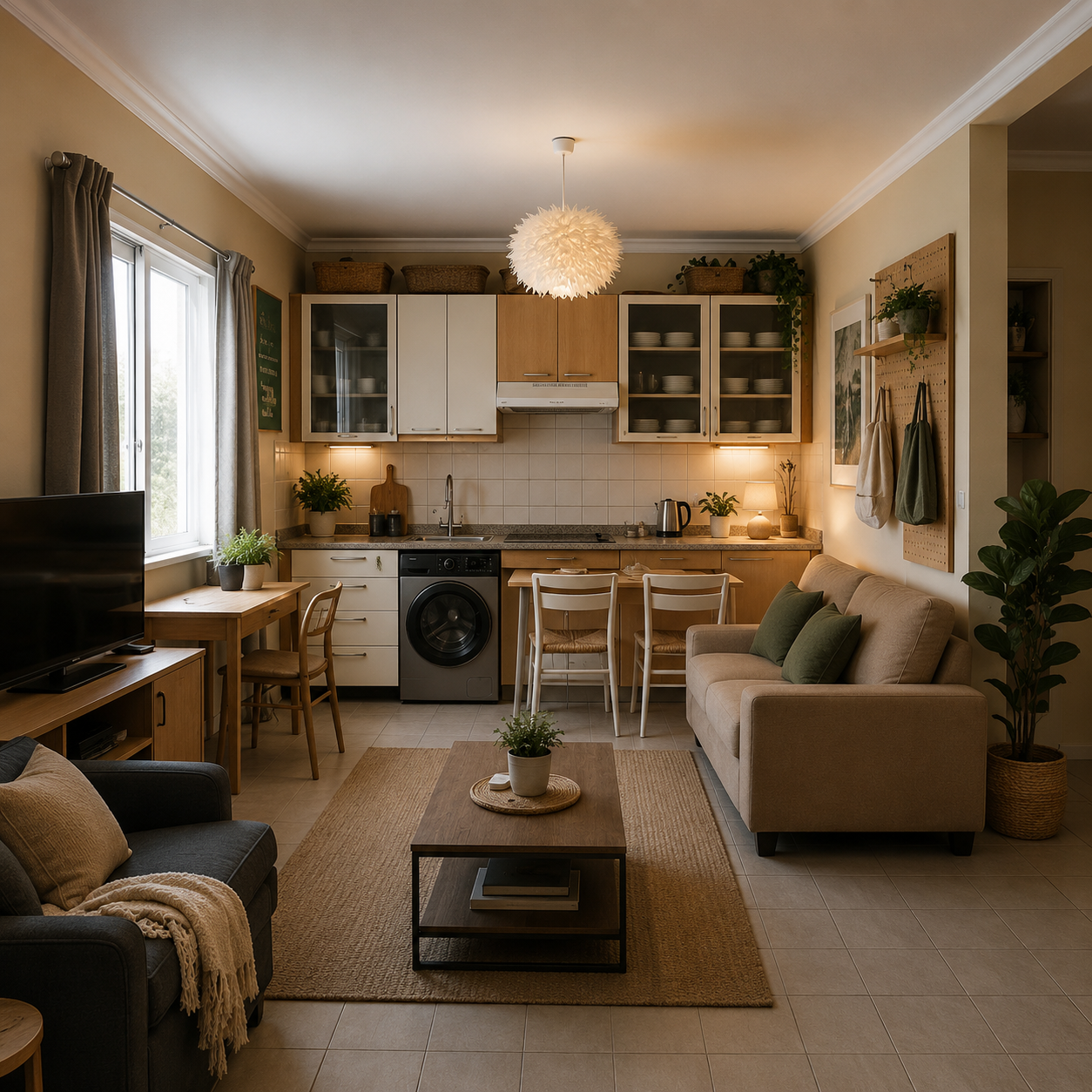
Your Space Is Reflecting Your Mind: How to Reset Your Environment for Clarity
Your Space Is Reflecting Your Mind. Here Is How to Reset It.
Your home might be the reason you feel unsettled, and you do not even realise it.
Most people attribute restlessness, difficulty focusing, or a persistent sense of unease to stress, their schedule, or the demands of daily life. Rarely do they look at the space around them. But the environment you occupy every day has a quiet and consistent influence on how you think, how you feel, and how well you function.
When a space feels cluttered, chaotic, or simply without intention, it becomes harder to think clearly, rest properly, or move through your day with any sense of ease. This is not a minor inconvenience. Over time, it accumulates.
What Your Space Is Actually Communicating
There is a reason certain rooms make you exhale the moment you walk in, and others make you tense without knowing why.
Your brain is constantly processing your environment, even when you are not consciously aware of it. Visual clutter, poor layout, harsh lighting, furniture that disrupts natural movement — all of these create low-level noise that your mind has to work to filter out. That filtering takes effort. And that effort, repeated every day across every room, creates a kind of mental fatigue that is difficult to trace back to its source.
The signs are often subtle. You feel restless at home even when nothing is wrong. You move from room to room without settling. You struggle to focus in spaces that were meant for work. You cannot fully rest in spaces that were meant for recovery. These are rarely just productivity problems. More often, they are environmental ones.
The Psychology Behind a Cluttered Space
Clutter is not simply a visual issue. It is a psychological one.
Every object in your environment carries a degree of visual weight. When a space contains more than the eye and mind can comfortably process, the brain does not fully disengage. It remains alert, scanning, and categorising. That low hum of processing does not stop just because you sit down or try to relax.
This is why a crowded room can feel exhausting even when nothing demanding is happening in it. And conversely, why a well-considered space — one where everything has a purpose and a place — allows the mind to settle in a way that feels almost immediate.
Clarity in a space creates the conditions for clarity in thought. That relationship is not coincidental. It is by design.
How Intentional Design Addresses This
Resetting your environment does not always require a complete redesign. But it does require intention, and intention is not the same as simply tidying up.
Lighting is one of the most underestimated elements in how a space feels. Harsh overhead lighting increases tension and creates a sense of exposure. Soft, layered lighting signals safety and ease to the nervous system. The shift can be significant, and it costs far less than most people assume.
Layout shapes how naturally you move through a space. When furniture placement works against the natural flow of a room, movement feels effortful and slightly frustrating in a way that is hard to pinpoint. When it is considered properly, you stop thinking about the space entirely. You simply inhabit it.
Editing what is in a space matters as much as what is added to it. The question is never about removing everything. It is about being deliberate about what earns its place. Objects that serve no function and carry no meaning are not neutral. They are contributing to the noise.

Designing an Environment That Works With Your Mind
At NateBel Interiors, we understand that the most valuable thing a well-designed home delivers is not a particular aesthetic. It is the feeling of being in a space that works quietly and consistently in your favour.
A home designed with genuine intention supports focus when you need to think clearly. It encourages rest when you need to recover. It creates ease in the routines that make up the majority of your day. And it does all of this without demanding your attention or effort in return.
That quality of environment does not happen by accident. It is the result of understanding not just what a space should look like, but what it needs to do for the person living in it.
The Space You Are In Is Shaping You
Your environment is not a backdrop to your life. It is an active participant in it.
The space you wake up in, work in, eat in, and rest in is shaping your mental state, your decisions, and your sense of ease every single day. When that space has been designed with care, the effect is one of quiet, consistent support. When it has not, the effect is equally consistent, just in the opposite direction.
If your home looks considered but still feels like something is working against you, that feeling is worth taking seriously. Spaces do not have to be perfect to feel right. But they do need to be intentional.
That is where the real work of design begins.
Post a Comment
You must be logged in to post a comment.